
Texas offers two main paths to become a certified teacher: traditional certification and alternative certification. Traditional certification is built into a four-year college program, where you earn your bachelor’s degree and your teaching credential at the same time. Alternative certification (ACP) is for people who already have a bachelor’s degree and want to become teachers without going back for a second one. If you already hold a degree, an ACP is almost always the faster, more affordable path — and the certificate you earn at the end is identical to the traditional one.
Key Takeaways
- Traditional certification means earning your teaching credential as part of a college bachelor's degree, usually over four years.
- Alternative certification is a Texas Education Agency (TEA)-approved path designed for people who already have a bachelor's degree in any subject.
- The traditional route is best for high school students or current undergraduates who already know they want to teach.
- The alternative route is built for career changers, recent graduates with non-teaching degrees, stay-at-home parents returning to work, and military veterans.
- Both paths lead to the same Standard Texas Teaching Certificate — there is no difference in what or where you can teach once you finish.
- Most adults considering teaching in Texas qualify for alternative certification and can complete it in 12 to 18 months while earning a teacher's salary during their internship year.
The Two Paths to a Texas Teaching Certificate
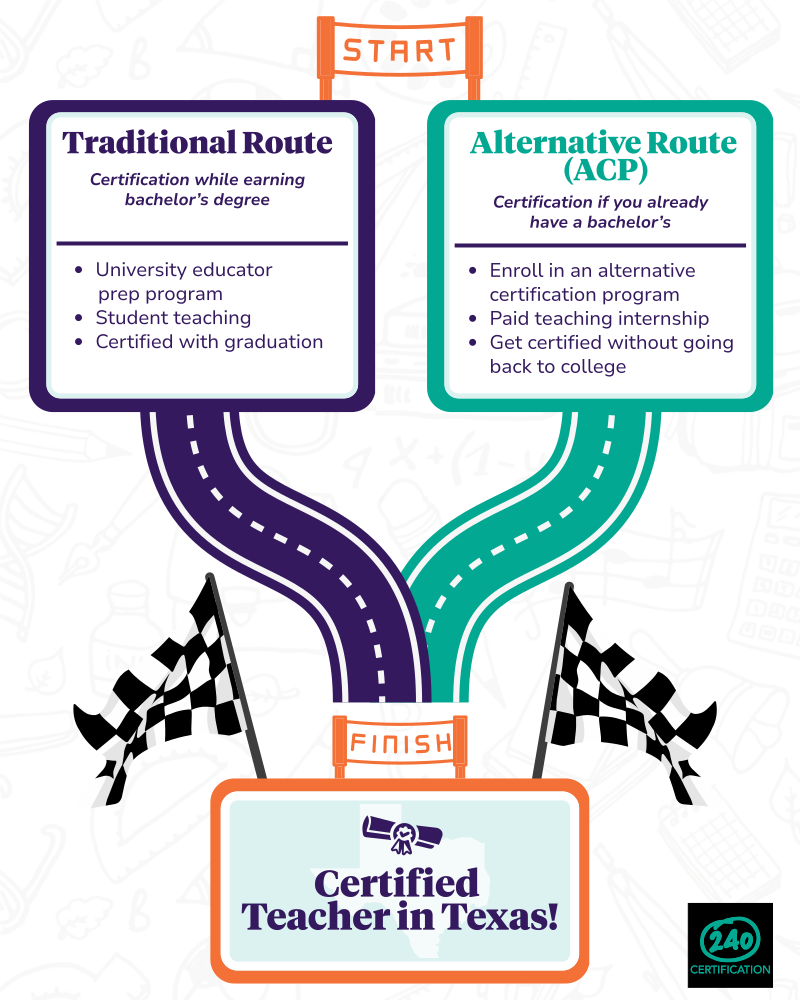
There are two main routes to earn teacher certification in Texas:
- Traditional certification: You earn your teaching credential while you're getting your bachelor's degree, through a college or university education program. This path is built into a four-year degree.
- Alternative certification: You already have a bachelor's degree (in any subject), and you complete a separate program that prepares you to teach. This path uses an Alternative Certification Program, or ACP.
Both paths are approved by the Texas Education Agency (TEA) — the state agency that sets the rules for teacher certification in Texas. Both lead to the same standard Texas teaching certificate. The difference is mostly about timing: when you got your degree, and what you majored in.
Let's walk through each one.
What Is Traditional Teacher Certification?
Traditional certification is the four-year college path. You enroll as an undergraduate, choose education as your major (or pair education with a content area like math or English), and your teacher prep is built into your degree.
Here's what's typical of the traditional route:
- You complete a bachelor's degree at a Texas college or university with an approved Educator Preparation Program (EPP) — a TEA-approved program that trains and recommends candidates for certification.
- Your coursework covers both your subject area and education classes like lesson planning, classroom management, and child development.
- You complete student teaching — a full semester (sometimes a full year) of classroom experience, unpaid, under a mentor teacher.
- You take and pass your Texas Examinations of Educator Standards (TExES) — the state certification exams.
- You graduate with your degree and your teaching certificate at the same time.
Traditional certification is best for:
- Current high school students who already know they want to teach.
- Current undergraduates who haven't picked a major yet.
- People who don't have a bachelor's degree and are starting college from scratch.
If you already have a bachelor's degree in something else, going back for a second bachelor's just to teach is rarely the right move. That's exactly why alternative certification exists.
What Is Alternative Teacher Certification?
Alternative certification is built for people who already have a bachelor's degree but didn't complete a teacher prep program in college. Instead of going back for another degree, you enroll in an Alternative Certification Program (ACP), which is a type of EPP designed for adults with degrees in something other than education.
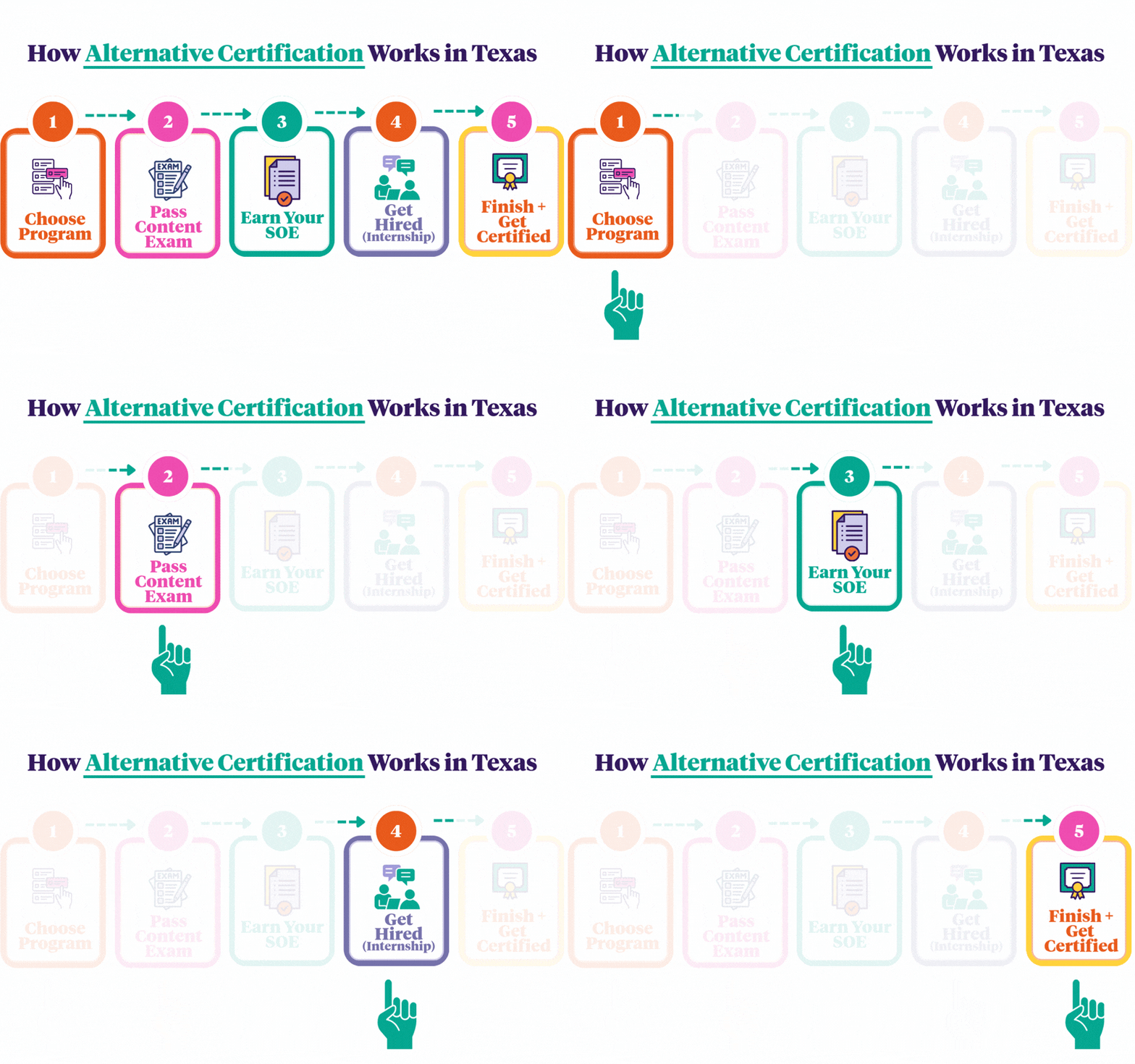
Here's what's typical of the alternative route:
- You enroll in a TEA-approved ACP. Your bachelor's degree, in any subject, qualifies you to apply.
- You complete program coursework — usually online and self-paced — covering pedagogy, classroom management, and Texas-specific teaching requirements.
- You pass your content-area TExES exam, which is the state test for the subject you'll teach.
- You complete required classroom observation hours.
- You earn your Statement of Eligibility (SOE) — a document from your program that shows you're eligible to be hired as a teacher intern.
- You apply for and accept a paid teaching job. That job becomes your internship year.
- You finish program requirements during your internship year, including your Pedagogy and Professional Responsibilities (PPR) exam — the TExES that tests how to teach, not just what to teach.
- After your internship year is complete, your program recommends you for full certification.
Alternative certification is best for:
- Career changers moving into teaching from another field.
- Recent college graduates with non-education degrees who decided after college that they want to teach.
- Undergraduates in their final semester of a bachelor's degree.
- Stay-at-home parents returning to the workforce.
- Military service members and veterans transitioning to civilian careers.
- Anyone who already holds a bachelor's degree.
For most adults exploring teaching, alternative certification is the clear path. You don't have to start over. You don't have to pause your life for four years. Most candidates finish in 12 to 18 months, and you'll be earning a full teacher's salary during your internship year.
Traditional vs. Alternative: A Side-by-Side Comparison
Here's how the two paths compare for someone who already has a bachelor's degree.
| Feature | Traditional Certification | Alternative Certification (ACP) |
| Best for | Undergraduate students | Adults with a bachelor's degree or in their final semester. |
| Length | 4 years (built into a bachelor's degree) | 12–18 months on average |
| Total Cost | Tens of thousands of dollars (full bachelor's tuition) | A few thousand dollars (program tuition + state fees + exam fees) |
| Format | In-person college classes | Often online and self-paced |
| Classroom Experience | Unpaid student teaching, one semester | Paid internship as the teacher of record, one school year |
| What You Earn | Bachelor's degree + teaching certificate | Standard Texas Teaching Certificate |
| Final Certificate | Standard Texas Teaching Certificate | Standard Texas Teaching Certificate |
Is Alternative Certification "Less Than" Traditional?
This is the question we hear most from career changers, so let's answer it directly.
No. Your certificate is the same. Your eligibility to teach is the same. Districts hire teachers from both paths every year, and many superintendents will tell you their best teachers come from second careers — because life experience makes a great teacher.
The state of Texas treats both paths as equal preparation for the classroom. Once you have your standard certificate, no one looks at how you got it. They look at how you teach.
Why Most Career Changers Choose an ACP
If you already have a bachelor's degree, three things make alternative certification the clear choice over going back to school.
1. You don't repeat your degree. Your bachelor's already qualifies you. You don't have to pay for or sit through four more years of general education classes.
2. You earn while you learn. The internship year is paid. You're hired as a full classroom teacher, with a teacher's salary and benefits, while you finish your final program requirements. Unpaid student teaching is a built-in part of the traditional route.
3. The timeline is short. Most ACP candidates are eligible to be hired within a few months of starting and finishing their full certification within 12 to 18 months of enrolling. If you want to dig deeper into how long does it take to become a teacher in Texas, read our companion article.
Ready to Take the Next Step?
If you already have a bachelor's degree (or are in your final semester) and you're choosing between going back to school for an education degree or pursuing alternative certification, the math and the time almost always favor ACP. Apply to 240 Certification for free at 240certification.com/apply. There's no commitment to apply. You'll upload your transcripts and answer a few questions, and we'll let you know if you qualify.
How 240 Certification Fits In
240 Certification is a TEA-approved ACP. We're built for career changers and adults who already have a bachelor's degree and want to become Texas teachers without going back for a second one.
When you apply, you'll talk to an Admissions Advisor who walks you through the requirements. Once you're enrolled, you'll be paired with your personal Program Advisor — a real person who stays with you from your first day in the program through your full certification.
We handle the paperwork. We track your milestones. We tell you exactly what to do next. You focus on learning to teach.
So Which Path Should You Choose?
Here's the short version:
- No bachelor's degree yet? Traditional certification is probably your path. Choose a Texas college with an approved EPP and major in education or pair education with a content area.
- Already have a bachelor's degree? Alternative certification is almost certainly your path. You already qualify, the timeline is shorter, and you'll be earning a teacher's salary during your internship year.
Don't stress about making the perfect choice. Once you have your standard certificate, both paths look identical on paper — and identical in the classroom. Apply to 240 Certification for free and find out if alternative certification is right for you: 240certification.com/apply
Frequently Ask Questions
Not harder, just different. Traditional certification spreads coursework over four years and gives you a slow ramp into the classroom. Alternative certification compresses prep into one year and puts you in front of students as the teacher of record, with a paycheck. The work is real in both paths. What’s different is the pace.
Yes. Texas school districts hire ACP candidates every year. Most districts are very familiar with intern teachers, because so many Texas teachers come through alternative certification. Some districts actively prefer ACP candidates because they often bring real-world experience from previous careers.
Yes, if you already have your bachelor’s degree (or are about to finish it). If you’re partway through an undergraduate education program but haven’t graduated, you’d usually finish your degree first, then either complete your traditional program or transition into an ACP. If you already have a non-teaching bachelor’s degree, an ACP is the natural next step.
Yes. Both paths lead to the same Standard Texas Teaching Certificate. Once you’re certified, your certificate doesn’t note which path you took. You’re a certified Texas teacher.
In most public schools, no — you need certification to be the teacher of record. There are limited exceptions in some District of Innovation (DOI) districts and in some private schools, but the path most Texas teachers take is one of the two options in this article.
A second bachelor’s degree usually takes two to four years, even with transfer credit. Most ACP candidates finish certification in 12 to 18 months — and they’re earning a teacher’s salary during the second half of that timeline. For someone with a degree already, alternative certification saves years and tens of thousands of dollars.
Here To Help You Become A Teacher In Texas!
240 Certification specializes in helping teachers become certified in Texas. We create personalized plans tailored to your specific needs, and you will have a dedicated advisor to guide you throughout the process.