
The fastest way to become a teacher in Texas is through an Alternative Certification Program (ACP) — a TEA-approved path for people who already have a bachelor’s degree. If you move efficiently through your program’s early requirements, you can earn your Statement of Eligibility (SOE) and be hired into a paid teaching job in as little as a few months. From there, your internship year counts as the final phase of certification. Most candidates complete the full process in 12 to 18 months, but the candidates who move fastest are the ones who start early, pass their content exam on the first attempt, and begin job searching before hiring season ends.
Key Takeaways
- The fastest path to teaching certification in Texas for degree holders is through an Alternative Certification Program (ACP), which lets you earn your certification while teaching.
- You can be hired into a paid teaching job — and start your official internship — as soon as you earn your Statement of Eligibility (SOE), which you can reach in a matter of months.
- Passing the TExES (Texas Examinations of Educator Standards) content exam on your first attempt is the single biggest factor in how fast you move through the process.
- Texas teacher hiring season peaks between March and July, so starting your ACP early in the calendar year puts you in position to get hired before the school year begins.
- Candidates who already have a job offer — or who are already teaching under a District of Innovation (DOI) designation — may be able to start their internship even faster.
- The time it takes depends on how quickly you apply, how prepared you are for your exam, and when you start looking for a teaching position.
Why ACP Is the Fastest Route If You Have a Degree
If you already have a bachelor’s degree, going back to school for a traditional certification is not your fastest option. A traditional program typically takes one to two years of full-time coursework before you’re certified. That’s time in the classroom as a student — not as a paid teacher.
An Alternative Certification Program (ACP) — a type of Educator Preparation Program (EPP) approved by the Texas Education Agency (TEA) — flips that model. You complete the early coursework and requirements, then you get hired and teach. Your paid teaching internship is the final stage of the process, not a prerequisite for it.
For most degree holders, ACP is both the fastest and the most practical path to certification.
The Phases That Actually Determine Your Speed
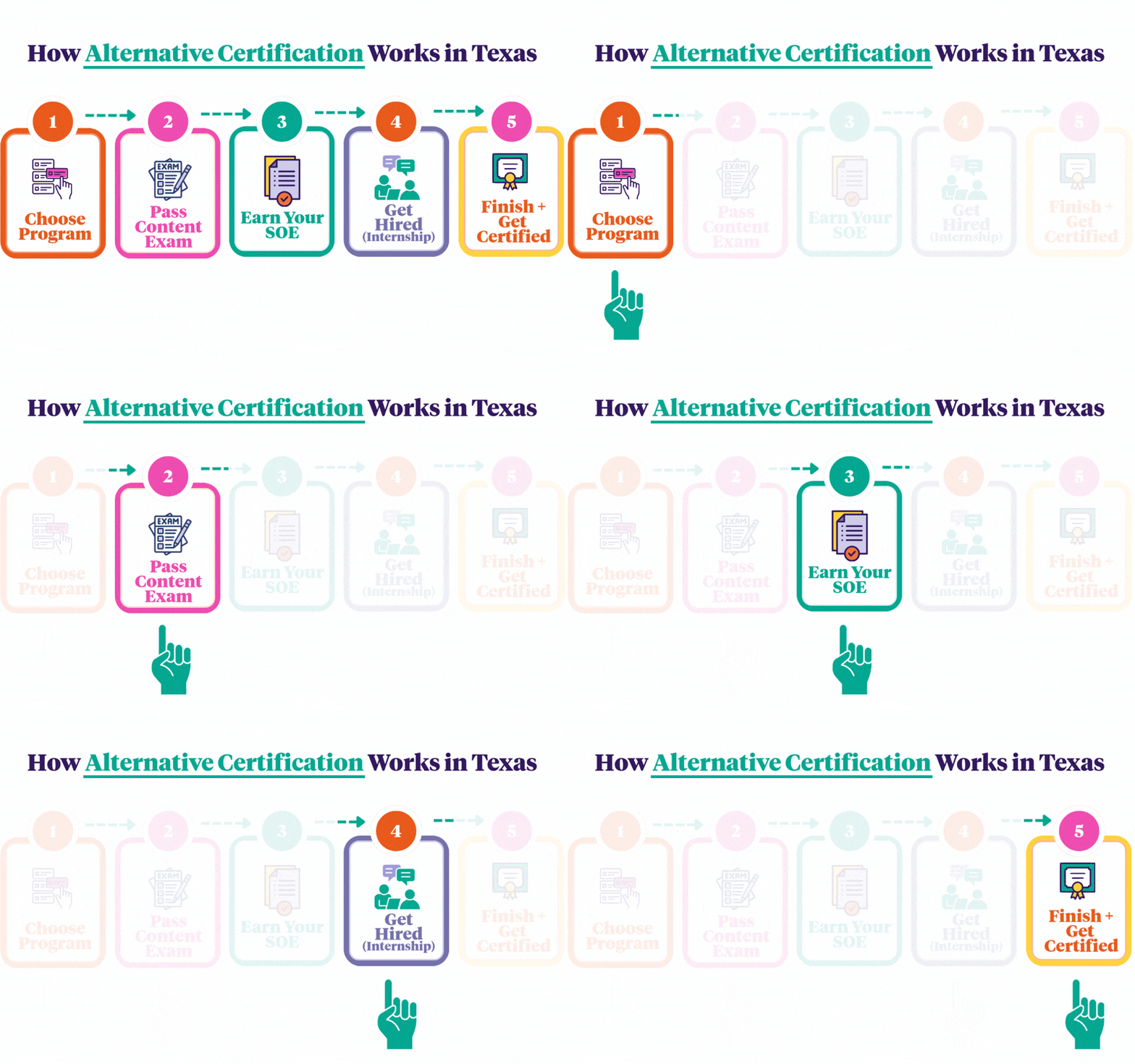
The Texas certification process has a few key phases. How fast you move through each one determines your overall timeline.
Phase 1: Applying and enrolling in a program
This is entirely in your hands. The sooner you apply, the sooner your clock starts. At 240 Certification, the application is free and you can complete it online. Once you’re admitted and enrolled, you get access to your coursework and your Program Advisor — the person who helps you map out your next steps.
If you’re already thinking about this, don’t wait. Apply now and figure out the details as you go: 240certification.com/apply.
Phase 2: Completing early requirements and passing your content exam
This is where most candidates either speed up or slow down. Your program’s early requirements — coursework, observation hours, and other TEA prerequisites — are what unlock your SOE. But the single biggest variable is your TExES content exam.
The TExES is the state certification exam for your subject area. You have to pass it before your program can issue your SOE. Candidates who study consistently and pass on the first attempt stay on pace. Candidates who need to retake it add weeks or months to their timeline.
Don’t take the exam before you’re ready — but don’t put it off longer than necessary either. Your program will let you know when you’re approved to register.
Phase 3: Earning your SOE and getting hired
Once you’ve met your program’s early requirements, your program issues your Statement of Eligibility (SOE). This is the document that makes you hirable. With an SOE in hand, you can apply for paid teaching positions that count toward your internship.
Texas teacher hiring season runs roughly from February through July, with the heaviest activity in spring. If you time your program entry and exam around that window, you give yourself the best shot at getting hired before a new school year starts.
Phase 4: Completing your internship year
Once you’re hired into a qualifying teaching position, your internship begins. This is typically a full school year — the time you spend in the classroom teaching your subject, supported by your program and observed by your campus mentor and field supervisor.
After you complete your internship and the final program steps, you apply for your standard Texas teaching certificate through the TEA’s Educator Certification Online System (ECOS). At that point, you’re fully certified.
What Speeds Things Up
Some factors are within your control. Others depend on timing and circumstance. Here’s what actually helps:
- Starting early in the calendar year. If you enroll in January or February, you have time to complete your early requirements and pass your exam before Texas hiring season peaks in spring. That puts you on track to be hired for a classroom that fall.
- Passing your TExES on the first attempt. Exam retakes are the most common reason candidates’ timelines get extended. A retake adds the cost of a new exam registration, the wait for retake approval, and additional study time. Taking your preparation seriously before registering is worth it.
- Knowing your subject area before you start. Candidates who are already strong in their content area — a chemistry grad applying to teach chemistry, for example — typically need less time to prepare for their TExES than candidates who are stretching into a new subject.
- Being flexible about job location. Candidates willing to look at a wider range of districts, including suburban and rural areas, tend to find positions faster than candidates limiting their search to one district in a major metro area.
- Already having a teaching job. Some candidates come to 240 Certification after they’ve already been hired into a classroom — under a District of Innovation (DOI) designation or in a similar situation. A DOI is a designation that allows some districts to hire candidates who aren’t yet certified under certain conditions. If you’re already in that situation, talk to your Program Advisor right away. That job may be convertible into your qualifying internship, which could significantly shorten your remaining timeline.
What Can Slow Things Down
Being honest about what creates delays is more useful than pretending the process is a straight shot. Here are the most common causes:
Waiting too long to take the exam. Candidates sometimes put off registering for their TExES out of nervousness or wanting to feel “more ready.” Waiting past your program’s approval window or past hiring season is a real cost.
Missing hiring season. Texas school districts hire most of their teachers between March and July. If you complete your early requirements in August, you may be waiting until the following spring to find the right position. That doesn’t mean you can’t find a job — late hires happen — but the window is smaller.
Inconsistent progress through coursework. Life happens. But coursework delays push back your exam, your SOE, and your ability to apply for jobs. Staying in regular contact with your Program Advisor helps you stay on track even when things get busy.
Needing to retake the TExES. It happens, and it’s not the end of the road — but it does extend your timeline. If you fail, your program will walk you through the retake approval process.
Can You Become a Teacher in Texas in Less Than a Year?
Technically, yes — for some candidates, in some circumstances.
If you enroll early in the calendar year, pass your TExES quickly, earn your SOE, and get hired by summer, you could start your internship that fall. From enrollment to first day in the classroom could be five to seven months. But your internship year still has to happen — typically one full school year — before you receive your standard certificate.
So even in the fastest realistic scenario, the certification process takes at least 12 months from enrollment to final certificate. For most candidates, 12 to 18 months is the real range. What you can control is how quickly you get into a classroom and start earning a teacher’s salary.
Your Fastest First Step
If speed matters to you, the worst thing you can do is wait to get started. Every week you delay is a week further from your SOE and further from hiring season.
The application to 240 Certification is free. You can complete it today, start coursework as soon as you’re admitted, and have a real conversation with your Program Advisor about what your personal timeline looks like.
Ready to stop planning and start moving? Apply here: 240certification.com/apply or reach out to an Admissions Advisor directly: admin@240certification.com
Frequently Asked Questions
How fast can I become a teacher in Texas?
Most candidates complete the full process — from enrolling in an ACP to receiving their standard certificate — in 12 to 18 months. Some candidates move faster depending on how quickly they pass their TExES exam, when they find a teaching position, and whether they’re already working in a school. Getting started early in the calendar year and staying consistent is the most reliable way to move quickly.
What's the fastest alternative certification program in Texas?
Speed depends more on your own pace than on which program you choose. That said, a program with strong advising support helps you avoid delays — because most timeline extensions come from candidates who aren’t sure what to do next and wait too long to ask. At 240 Certification, every enrolled candidate is paired with a personal Program Advisor who keeps them on track from enrollment to certificate.
Can I get hired as a teacher in Texas without being fully certified?
Yes. Once you earn your Statement of Eligibility (SOE) from your ACP, you’re eligible to be hired into a paid teaching internship. You are not fully certified at that point, but you are hirable. School districts and charter schools hire ACP candidates regularly, because the internship model is a normal part of how Texas certifies teachers.
Does passing the TExES exam on my first try really affect my timeline that much?
Yes — it’s the biggest single variable. A retake means waiting for retake approval, paying the exam fee again, and putting in more study time before you can re-register. That delay could push your SOE and job search into the next hiring cycle. Preparing well before your first attempt isn’t just about the exam — it’s about protecting your timeline.
What if I'm already teaching in a Texas school?
If you’re currently teaching under a District of Innovation (DOI) designation or in another capacity, your job may already qualify as your certification internship. Talk to an Admissions Advisor as soon as possible to find out whether your current position counts toward your program requirements. Depending on your situation, you could be further along than you think.
When is Texas teacher hiring season?
Hiring activity typically picks up between February and March and peaks through May and June. Many districts finalize their rosters by July. Late hires do happen — especially in high-need subjects like math, science, and special education — but starting your search in spring gives you the most options.