
A Status Letter and a Statement of Eligibility (SOE) are two different documents — and they matter at different points in the certification process. Your Status Letter confirms that you’ve enrolled in an Alternative Certification Program (ACP) and are actively working toward certification. Your SOE is issued later, after you’ve completed early program requirements, and it’s what makes you eligible to be hired as a paid teacher intern. One shows you started. The other shows you’re ready to teach.
Key Takeaways
- A Status Letter confirms that you are enrolled in a Texas Education Agency (TEA)-approved ACP and are in the process of completing certification requirements.
- An SOE — Statement of Eligibility — is a separate document your program issues after you’ve met specific milestones, including completing Block 1 coursework, logging 50 observation hours, and passing your content exam (TExES).
- School districts may request your Status Letter during early hiring conversations, but they need your SOE before they can hire you as a teacher of record.
- You do not apply for either document yourself — both come from your certification program.
- The SOE is the document that unlocks your ability to start your paid teaching internship, which is required to earn your standard Texas teaching certificate.
- If you’re still working toward your SOE, your Status Letter shows districts you’re on track — it’s not a dead end, it’s a stepping stone.
Why This Gets Confusing
If you’ve heard both terms and weren’t sure whether they were the same thing — you’re not alone. This is one of the most common points of confusion for applicants and early candidates at 240 Certification.
The two documents have similar names. They both come from your program. They’re both related to your certification status. But they serve completely different purposes, and they’re issued at different points in the process.
Let’s walk through each one.
What Is a Status Letter?
A Status Letter is a document your ACP issues to confirm that you are currently enrolled and actively pursuing teacher certification.
It doesn’t certify that you’re ready to teach. It confirms that you’ve started — and that you’re working through an approved program.
When do you get a Status Letter?
You can typically request a Status Letter once you’re enrolled in your program. At 240 Certification, that means after you’ve been admitted and completed your Initial Advising Meeting (IAM) — your first meeting with your Program Advisor.
What is a Status Letter used for?
School districts sometimes ask for a Status Letter early in the hiring process, especially if you’re job searching before you’ve earned your SOE. It shows a district that you’re legitimately enrolled in a TEA-approved program and are on the path to certification.
It’s worth knowing that a Status Letter alone won’t get you hired as a teacher of record. Districts need your SOE for that. But the Status Letter can be helpful for early conversations — it shows you’re not starting from zero.
What Is a Statement of Eligibility (SOE)?
Your Statement of Eligibility (SOE) is a document your program issues after you’ve completed the early requirements that make you eligible to work as a paid teacher intern.
This is the document that changes your status from “enrolled and working toward it” to “ready to be hired and placed in a classroom.”
When do you earn your SOE?
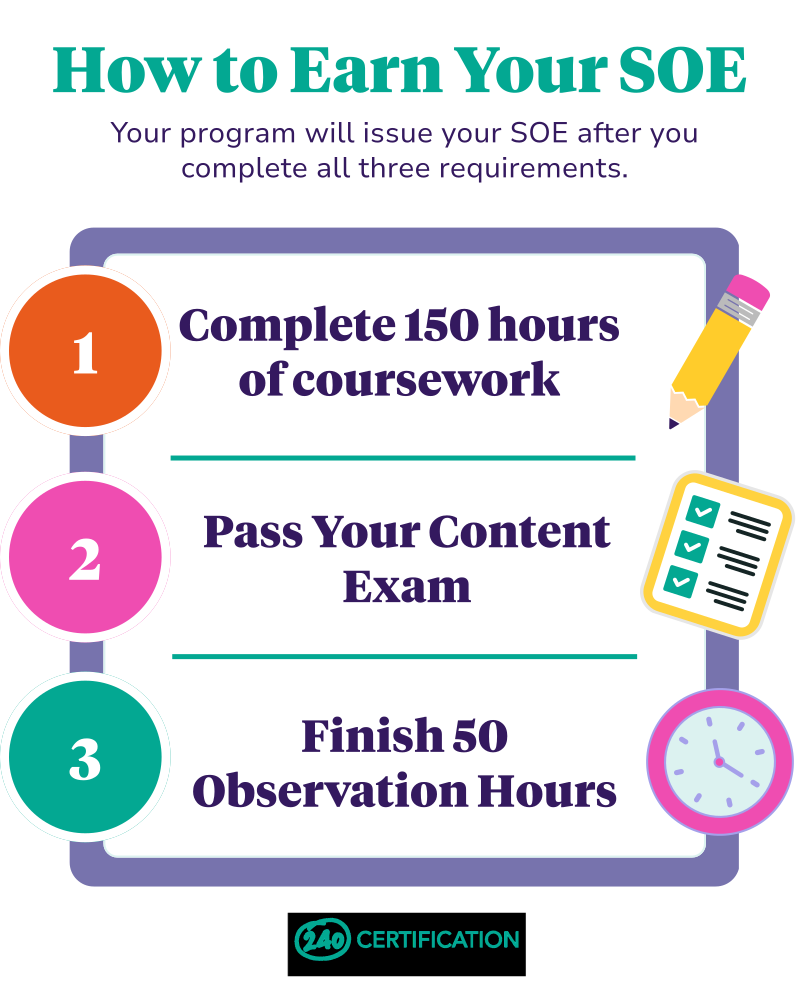
Your program issues your SOE after you’ve completed three specific milestones:
- Block 1 coursework — the foundational coursework in your certification program
- 50 observation hours — time spent observing in a real classroom before you’re the teacher of record
- Your content exam (TExES) — the Texas Examinations of Educator Standards exam for your subject area and grade level
All three of those have to be complete before your program can issue your SOE. You can’t shortcut any of them.
If you want to understand the content exam in more detail — what it tests, how to register, and what to expect — read What Is the TExES Exam? A Complete Guide.
What does the SOE actually do?
Once your program issues your SOE, you can officially apply for paid teaching positions that count as your internship year. School districts and charter schools can hire you as a teacher of record with your SOE in hand.
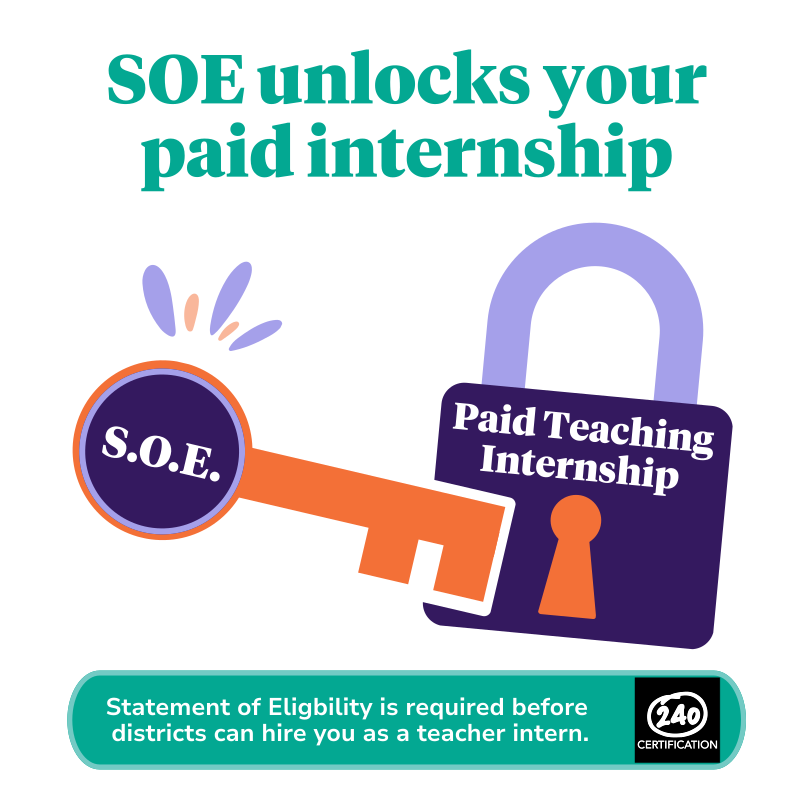
That’s a big deal. Your SOE is what moves you from “candidate” to “teacher.”For a full breakdown of how the SOE works and what comes after you have it, see the published Statement of Eligibility (SOE): What It Is and How to Get It article.
Status Letter vs. SOE: Side-by-Side
| Status Letter | Statement of Eligibility (SOE) | |
|---|---|---|
| What it confirms | You’re enrolled in a TEA-approved ACP | You’ve met the early requirements to work as a teacher intern |
| When you get it | After enrollment (on request) | After completing early coursework, 50 observation hours, and your TExES content exam |
| Who issues it | Your certification program | Your certification program |
| What it unlocks | Early hiring conversations; confirms you’re on track | Eligibility to be hired as a paid teacher of record |
| Required to teach? | No | Yes |
In short: the Status Letter is a confirmation. The SOE is a credential.
What Do You Need to Do to Get from Your Status Letter to Your SOE?
If you have a Status Letter and you’re wondering what it takes to get your SOE, here’s what to focus on:
1. Complete early coursework. This is the first phase of your program’s coursework — the foundational content your program requires before you can move into your internship. If you enroll with 240 Certification, your Program Advisor will map this out with you with Block 1 coursework.
2. Log 50 observation hours. Before you can work as a teacher of record, Texas requires you to observe in a real classroom setting. These hours need to be documented and submitted through your program.
3. Pass your TExES content exam. This is the exam that tests your subject-area knowledge — whether you’re going to teach high school math, elementary school, science, or anything else. Passing this exam is a firm requirement before your SOE can be issued. Don’t stress about finding the right exam — your Program Advisor can point you to exactly which test you need to take.
Once all three are complete, your program reviews your records and issues your SOE. At 240 Certification, your Program Advisor tracks your progress toward all three milestones and will let you know when you’re close.
If you’re just getting started and want to understand how the whole process fits together, the best place to start is the How to Become a Teacher in Texas article.
Ready to Start Working Toward Your SOE?
If you’re sorting through these terms because you’re trying to figure out if teaching is the right move — you’re asking exactly the right questions.
You don’t have to have every step figured out before you apply. At 240 Certification, your Program Advisor walks you through each milestone, including what to do first to get on track for your SOE. Apply for free at 240certification.com/apply and get your applicant portal started. We’ll take it from there.
Frequently Asked Questions
Can I apply for a teaching job before I have my SOE?
You can start job searching and have early conversations with districts before your SOE is issued. Some districts will ask for a Status Letter during this stage to confirm you’re enrolled in a TEA-approved program. However, you can’t be officially hired as a teacher of record — and your internship year can’t begin — until your program has issued your SOE.
Do I apply for my Status Letter and SOE myself?
No. Both documents come from your certification program, not from the state. You don’t file anything with the Texas Education Agency (TEA) to request them. At 240 Certification, your Program Advisor handles the issuance process and will let you know when you’ve hit the milestones needed for each.
What happens if I'm offered a job but don't have my SOE yet?
Talk to your program immediately. In some cases, a district may work with you on timing — especially if the role starts soon and you’re close to meeting the SOE requirements. If you’re hired before your SOE arrives, the situation gets more complicated. Reach out to your Program Advisor or contact us at admin@240certification.com to talk through your options.
Is the SOE the same as the intern certificate?
No. Your SOE is issued by your certification program and shows you’re eligible to be hired. Your intern certificate is issued by the state of Texas (through TEA) after your district hires you and submits the required paperwork. Both are needed before you formally begin your internship year, but they’re separate documents.
How long does it take to earn my SOE after I enroll?
It depends on how quickly you complete Block 1 coursework, your 50 observation hours, and your TExES content exam. For most candidates who stay on track, the SOE milestone comes within the first several months of the program. Your Program Advisor can give you a realistic timeline based on your specific situation.