
If you’ve been hired into a Texas teaching job before you’ve finished your certification, your job can still count — and you have a clear path forward. Texas allows two main routes for candidates in this situation: late hire status, for candidates hired during the late hire window (which starts 45 days before the first day of instruction and continues after the school year begins), and a District of Innovation (DOI) hire, for candidates hired by a district that uses local exceptions to state certification rules. In both cases, you still need to enroll in an Alternative Certification Program (ACP) right away, but your current teaching job can count as your internship year while you finish the rest of your requirements.
Key Takeaways
- A late hire is a candidate hired during the late hire window — which starts 45 days before the first day of instruction and continues after the school year begins — and the candidate’s ACP issues a special version of the Statement of Eligibility (SOE) so they can teach while finishing program requirements.
- A District of Innovation (DOI) hire is a candidate hired into a DOI district under local exceptions, who still needs to complete an ACP to earn a standard Texas teaching certificate.
- If you’re already in a classroom and not yet enrolled in a certification program, your most important next step is applying to an ACP today — your district expects you to do this.
- Your current teaching job can count as your ACP internship year as long as the school is approved by the Texas Education Agency (TEA) and your assignment matches the certification area you’re pursuing.
- 240 Certification works with late hires and DOI hires every year and has a specific intake process to get you set up quickly so you can keep teaching without a gap.
I’m Already Teaching. Now What?
First, take a breath. You’re not behind — you’re just on a different path than someone who started a program months in advance.
Plenty of Texas teachers get hired before they’re fully through their certification program. It usually happens for one of two reasons:
- You were hired late in the season, often called a “late hire.”
- You were hired by a District of Innovation (DOI) under local rules that allow them to put you in a classroom before you’re fully certified.
Both situations are normal. Both have a path forward. The key is moving fast and getting enrolled in a TEA-approved ACP. (TEA is the Texas Education Agency, the state agency that sets the rules for teacher certification in Texas. ACP stands for Alternative Certification Program — a type of Educator Preparation Program, or EPP, designed for people who already have a bachelor’s degree.)
Your school is expecting you to do this. Districts can’t keep you in the classroom long-term without you being enrolled in a certification program.
What Is a Late Hire in Texas Teacher Certification?
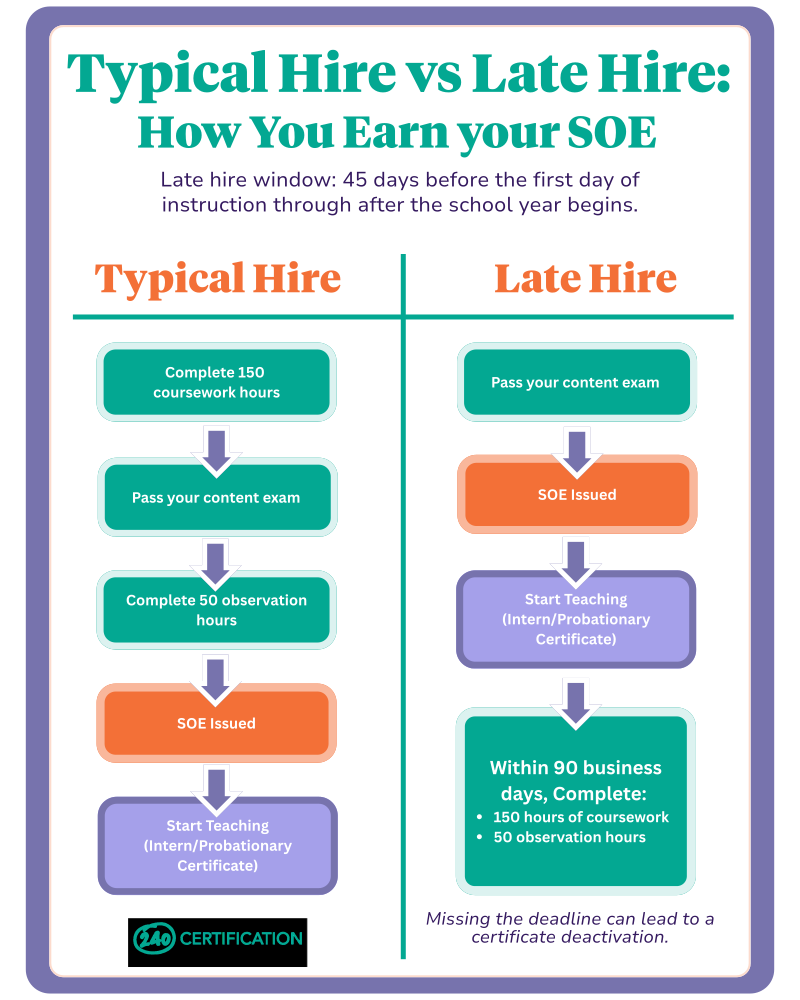
A late hire is a candidate who is hired during the late hire window — which starts 45 days before the first day of instruction and continues after the school year begins. You are a late hire if your start date falls inside that window and you haven’t yet completed all of the steps to earn a regular SOE.
TEA allows ACPs to issue a special version of the SOE for late hires so they can begin teaching right away while finishing program requirements.
The Statement of Eligibility (SOE) is the document your program issues to show you’re eligible to be hired as an intern teacher. Normally, you earn your SOE after completing certain coursework, passing your content TExES exam (Texas Examinations of Educator Standards), and finishing your required observation hours.
For a late hire, the rules are slightly different. Your ACP can issue your SOE before all of those steps are complete — but you’ll need to finish them on a tighter timeline that your program will lay out for you.
What does the late hire process look like?
Here’s what typically happens once you’re enrolled:
- You start coursework immediately.
- Your ACP issues your late hire SOE so you can be officially hired and processed.
- Your district fingerprints you and applies for your intern certificate through TEA.
- You begin teaching while continuing coursework, working toward your content exam, and completing your observation hours.
- Your teaching job counts as the start of your internship year.
You’re still expected to meet all the requirements of the program. You’re just doing them on a parallel timeline while you teach.
What Is a District of Innovation (DOI) Hire?
A District of Innovation hire is a candidate hired into a Texas teaching position by a district that has adopted DOI status and exercised its option to hire teachers under local certification exceptions. You are a DOI hire if you were offered a teaching role by a DOI district even though you don’t yet hold a Texas teaching certificate.
A District of Innovation is a designation Texas school districts can adopt that allows them to opt out of some state education requirements through a local plan. One of the most common exceptions districts use is around teacher certification — letting them hire someone who isn’t yet fully certified into a teaching role under local rules.
A DOI hire is a temporary local solution. To earn a standard Texas teaching certificate — the credential that follows you for your career and lets you teach anywhere in the state — you still need to complete an ACP and meet TEA’s certification requirements.
Will my DOI job count as my internship?
In most cases, yes — but it depends on whether your assignment matches the certification area you’re pursuing and whether the school is on TEA’s approved list. Your ACP will confirm this when you enroll. If something doesn’t line up, your Program Advisor will help you find a path that does.
What’s the Difference Between a Late Hire and a DOI Hire?
The two situations look similar from the outside. You have a teaching job, you’re not yet certified, and you need a program. But they’re handled through different mechanisms:
| Late Hire | DOI Hire | |
|---|---|---|
| What it is | A candidate hired during the late hire window — starting 45 days before the first day of instruction and continuing after school starts | A candidate hired under a District of Innovation’s local exception |
| What allows you to teach | A late hire SOE from your ACP, plus an intern certificate from TEA | A DOI local permit, with your SOE and intern certificate to follow once your ACP is in place |
| Hiring authority | TEA, through a fast-track SOE process | The district’s local DOI plan |
| Path to certification | Complete ACP requirements while teaching | Complete ACP requirements while teaching |
| Final outcome | Standard Texas teaching certificate | Standard Texas teaching certificate |
In short: both paths lead to the same place — your standard Texas teaching certificate — and both require you to enroll in an ACP. The difference is the legal mechanism that lets you start teaching today.
What Should I Do If I’m Already Hired?
Whether you’re a late hire or a DOI hire, your first move is the same: get enrolled in an ACP. Today if possible.
Here’s the order to go in:
- Apply to an ACP. This is the single most important step. Your district can’t fully process your hire as an intern without it. You can apply to 240 Certification for free at 240certification.com/apply.
- Tell the program you’re already hired. This is critical. Your ACP will route you to the right onboarding process — late hire setup, DOI setup, or standard enrollment — based on your situation.
- Gather your documents. You’ll need official transcripts and identification. The faster you get these uploaded, the faster your program can move you forward.
- Stay in touch with your district HR contact. Your school will need certain documents from your ACP, including your SOE. Communication on both sides keeps the process moving.
- Keep teaching. Once your paperwork is in motion, focus on your students. Your program will guide you through the rest.
If you’ve been telling yourself “I’ll deal with the certification piece once school settles down,” don’t wait. Texas requires that your program enroll you and submit certain documents within a specific window after your hire.
You don’t have to figure this out alone. Apply to 240 Certification for free at 240certification.com/apply, and an Admissions Advisor will help you map out exactly what to do based on your hire situation.
Will My Current Teaching Job Count as My Internship?
In almost every case, yes — as long as a few things line up:
- The school is TEA-approved.
- Your teaching assignment matches the certification area you’re pursuing (for example, if you’re certifying in Math 7–12, you need to be teaching math in grades 7–12).
- You’re teaching at least four hours of instruction in your certification area each day.
- You’re enrolled in an ACP and your program is officially tracking your internship year.
If your teaching assignment doesn’t match the certification area you originally planned to pursue, that’s not the end of the world. Your ACP can often help you adjust the certification you’re working toward so your current job aligns with the right credential.
This is something a Program Advisor at 240 Certification can walk through with you in your Initial Advising Meeting (IAM) — your first meeting after you enroll. Don’t try to solve it on your own. The rules around assignment matches are detailed, and we deal with this every week.
What If I’m Already Teaching and Not in Any Program?
This is the situation we hear about most. You took a job. You’re a few weeks in. You haven’t started a program yet, and now your district is asking when you’ll be enrolled.
Don’t stress. Here’s what to do:
- Apply to an ACP today. You can apply to 240 Certification for free at 240certification.com/apply.
- Once you apply, contact the program directly and let them know you’re already hired and need expedited setup. We have a specific intake for late hires and DOI hires.
- Submit your transcripts and identification documents as soon as you can.
- Schedule your IAM with your Program Advisor as soon as it’s available.
You’re going to be okay. Districts are used to this. ACPs are used to this. The system was built to handle late hires and DOI hires, because Texas schools need teachers and not every teacher comes through the traditional path.
How Long Do I Have to Get Certified Once I’m Hired?
Once you start teaching as an intern, you typically have one school year to complete your internship and the rest of your certification requirements. That includes:
- Finishing your ACP coursework.
- Passing your content TExES exam, if you haven’t already.
- Passing your Pedagogy and Professional Responsibilities (PPR) exam — the TExES test that covers how to teach, not just what to teach.
- Completing your full internship year successfully, including observations from your field supervisor.
- Receiving your standard certificate recommendation from your ACP at the end of the year.
If something happens during your internship year — illness, family emergency, a change in assignment — your program may be able to extend your timeline. Talk to your Program Advisor early if you think you’ll need more time. The earlier the conversation, the more options you have.
What Is the Intern Certificate, and How Do I Get It?
The intern certificate is the temporary Texas teaching credential that lets you be the teacher of record in your classroom while you complete your ACP. Once your program issues your SOE and your hire is processed, your district will help you apply for the intern certificate through TEA. You’ll see it in the state’s online systems — TEAL (TEA Login) and ECOS (Educator Certification Online System) — listed as your active credential.
If you’ve been hired into a DOI, your district may put you on a local DOI permit first, and your intern certificate may follow once your ACP is officially involved. Your Program Advisor will walk you through which certificate you currently hold, what it allows you to do, and what the next step is.
You’re Already Doing the Hard Part
If you’ve been hired into a Texas classroom without a teaching certificate, you’re already doing the work most candidates only read about. You’re showing up. You’re teaching kids. The certification process from here is paperwork and milestones — and you have a program to walk you through it.
Apply to 240 Certification for free at 240certification.com/apply. Tell us you’re already hired. We’ll take it from there.
Frequently Asked Questions
Will I lose my teaching job if I'm not enrolled in a program yet?
Not immediately, but you can’t stay in the classroom long-term without being in a TEA-approved ACP. Most districts give new hires a window to get enrolled. The sooner you apply, the safer your position is. If your district hasn’t brought this up yet, expect them to soon.
Can I be a late hire and a DOI hire at the same time?
Sometimes, yes. If you were hired by a District of Innovation late in the season, you might fall into both categories. Your ACP and district HR will figure out which paperwork applies. Your path to a standard certificate is the same either way.
Do I still have to take the content TExES exam if I'm already teaching?
Yes. The TExES content exam is required for your standard certification, no matter how you got into the classroom. If you haven’t taken it yet, your ACP will help you prepare and approve you to register. For a deeper look at the exam, see our article on the TExES exam.
What's the difference between a late hire SOE and a regular SOE?
A regular SOE is issued after you’ve completed early coursework, passed your content exam, and finished your observation hours. A late hire SOE is issued before all of those steps are finished, so you can begin teaching — but you’ll still need to complete those requirements during your internship year. For more, read our article on the Statement of Eligibility (SOE).
What if my DOI district says I don't need a certification program?
Some DOI districts can hire you locally under their own rules, but if you ever want to teach outside that district — or hold a standard Texas teaching certificate that goes with you for your career — you have to complete an ACP. Without it, your credential is tied to that one district. Most candidates choose to get fully certified for the flexibility.
Can 240 Certification help me if I'm already in a classroom?
Yes — this is something we handle every year. We have a specific process for late hires and DOI hires, including expedited enrollment and direct support for getting your SOE and intern certificate in place. Apply for free at 240certification.com/apply and let us know in your application that you’ve already been hired.