

Statement of Eligibility (SOE): What It Is and How to Get It
Quick Answer
Your Statement of Eligibility (SOE) is a document your certification program gives you when you’ve completed the early steps needed to start teaching as an intern. You do not apply for it yourself. Your program issues it after you’ve started coursework, passed your content exam, and completed required observation hours.
Once you have your SOE, you can apply for paid teaching jobs that count as your internship year.
Key Takeaways
- SOE stands for Statement of Eligibility.
- Most people earn an SOE after coursework, passing the content exam, and observation hours.
- Your program issues your SOE after you meet the requirements. It is not given beforehand.
- You need to earn test approval before you can register for your content exam.
- An SOE is what helps you qualify for a paid internship teaching job that counts toward certification.
Table of Contents
Your Statement of Eligibility (SOE)
Once you’re officially enrolled in an alternative certification program (ACP), it can feel like you’re ready to walk into a classroom and start teaching right away.
You’re close. But there’s one big step first.
To start teaching as a paid intern and be the teacher of record, you’ll need your Statement of Eligibility (SOE).
What is an SOE and Why Does It Matter?
Your Statement of Eligibility (SOE) is a document from your program that tells school districts you, the candidate, is ready to be hired as a teacher intern.
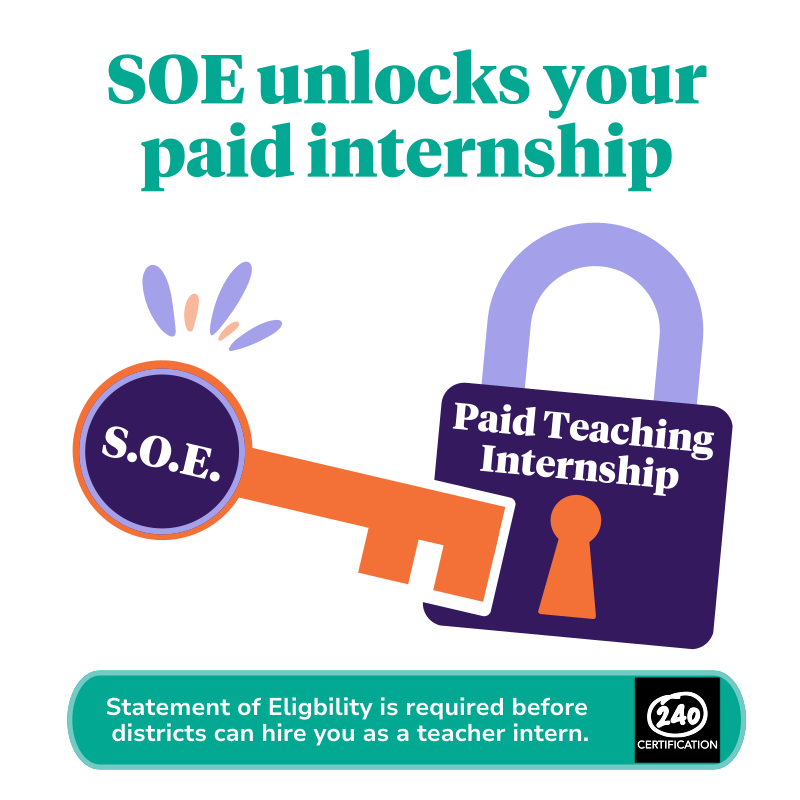
Three quick things to know about your SOE:
- Your SOE is not a teaching certificate. It’s a document that says you’re eligible to be hired as a teacher intern.
- After you are hired into that internship teaching position (because you have your SOE), your program can then recommend you for an intern or probationary certificate — and that’s the temporary teaching certificate that legally covers you to teach while you finish the program.
- You don’t apply for a Statement of Eligibility (SOE) on your own. Your program issues it once you finish the steps the Texas Education Agency (TEA) requires.
How Do I Earn My SOE?
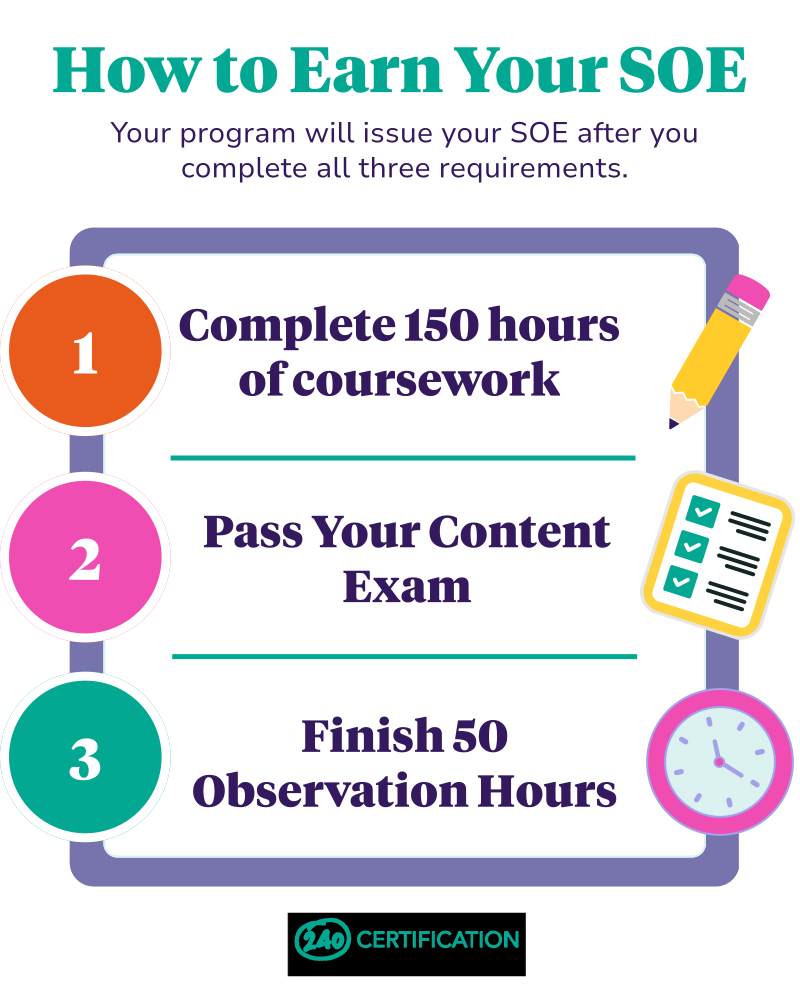
You will earn your SOE by completing these three things:
- Start and complete early coursework
- Pass your content exam
- Complete required observation hours
Let’s walk through each one.
Step 1: Complete Your First Coursework Hours
After you enroll, you’ll start coursework right away. This is your training, and it’s meant to build the classroom skills you’ll need as the teacher of record.
All TEA-approved programs must provide you with at least 300 total hours of coursework and/or training. This is a requirement set by TEA (Texas Education Agency) and SBEC (State Board for Educator Certification).
To earn your Statement of Eligibility (SOE), you’ll need to complete 150 of those hours (unless you qualify as a late hire. Read more about late hires below).
So no matter which program you choose, expect the same amount of coursework and same SOE requirements.
Step 2: Pass Your Content Test
Another big piece of earning your Statement of Eligibility (SOE) is passing your TExES content test for the subject and grade level you want to teach. This is a big part of your SOE because it proves to the school districts you know the subject you’re planning to teach.
Now, it can be tempting to schedule your test as soon as possible since your exam is such an important step in your journey, but, you usually can’t register for the exam right away. Your program has to give you test approval first.
Why Do I Need Test Approval?
Here’s why test approval matters:
✍️ It’s part of Texas certification rules. The state wants to make sure future teachers know their subject before they’re allowed to teach it. Your exam is one of the main ways that knowledge is checked.
⏳ It protects your timeline (and your wallet). Exams cost money, and retakes can slow you down. Programs use test approval to help you test when you’re prepared, not just when you’re eager.
💪 Your program is responsible for readiness. Your ACP is responsible for preparing you for your test. Most programs will require you to finish certain coursework or meet practice test goals before they approve you.
✅ Retakes often need approval too. If you don’t pass on the first attempt, your program may require extra study steps before approving a retake, especially since you are limited to five testing attempts.
👌 It helps make sure you pick the right exam. Some certification areas have extra test requirements, and test approval helps confirm you’re registering for the correct one for what you want to teach.
How do I Earn My Test Approval?
Test approval looks a little different in every program, because each alternative certification program (ACP) can set its own requirements. In general, you earn test approval by finishing the steps your program requires and showing you’re ready to pass—often through practice work or a practice test score.
For example, at 240 Certification, candidates gain test approval by completing their test prep course and passing the practice test with an 85% or higher.
Here’s are the general steps you’ll follow to earn test approval:
- Start coursework and follow your program’s test approval plan
- Meet program requirements for test approval
- Receive test approval and register for your exam
- Pass your content exam and keep moving toward SOE eligibility
Step 3: Complete Observation Hours (Field-Based Experience)
Before you can earn your Statement of Eligibility (SOE) and start your teaching internship, TEA requires 50 hours of Field-based experiences, which some refer to as observation hours. These hours must be completed before you begin an internship.
Observation hours are time you spend in real classrooms—watching, helping, and getting hands-on experience before you’re the teacher of record. Your program will provide instructions on how to complete and log your hours so the program can verify them.
Here are the basics things to know about observation hours:
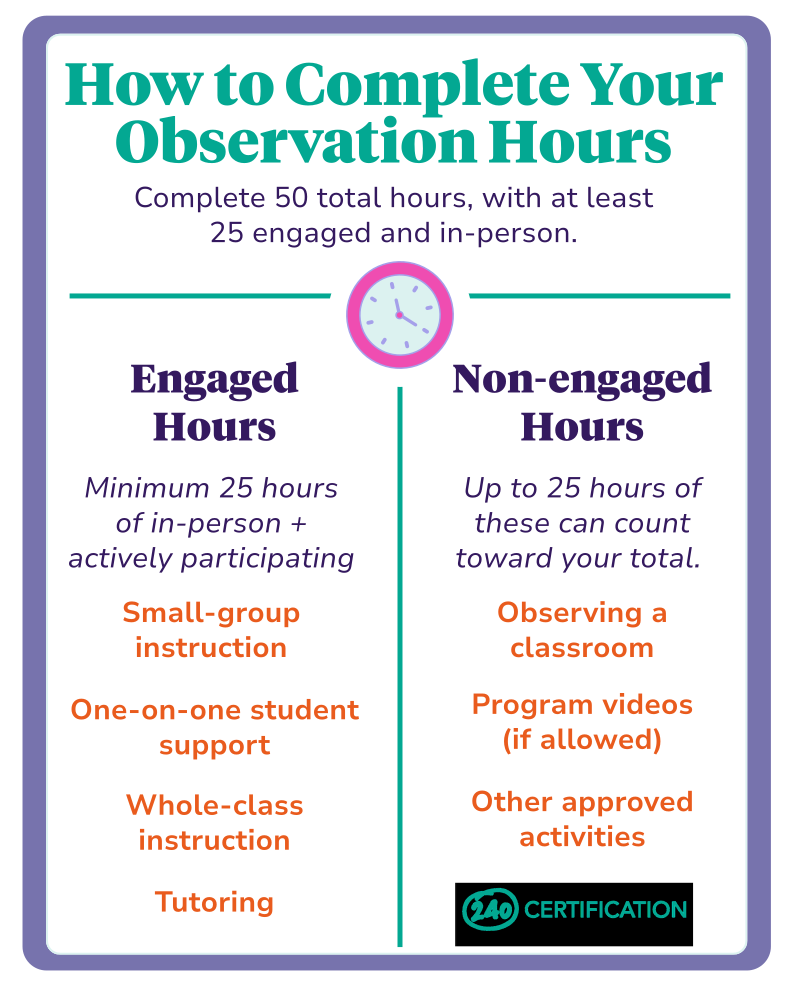
- You must complete 50 total hours.
- At least 25 hours must be in-person and actively engaged with the activity in a classroom. This includes activities like small group instruction, tutoring, and teaching the whole class, etc.
- Up to 25 hours may be non-engaged in-person activities, like observing a classroom, or videos provided by your program, if they allow that as an option.
- The hours must be completed after you are admitted into a program and before your internship starts
- Your hours must be documented and verified by your program
What Are Observation Hours (Field-Based Experience)?
Observation hours are not just sitting in the back of a classroom. 25 hours must include active participation in real classroom activities with real students, guided by your program.
Your observation hours can include things like:
✅ Small-group instruction (working with a few students at a time)
✅ Tutoring
✅ One-on-one student support
✅ Helping the lead teacher during instruction
✅ Practicing classroom management skills
✅ Co-teaching or assisting with whole-class instruction
You’ll also complete a written reflection for each experience.
Your program will give you guidelines for where you can complete your hours, what activities count, and how to log everything correctly.
What is a Late Hire?
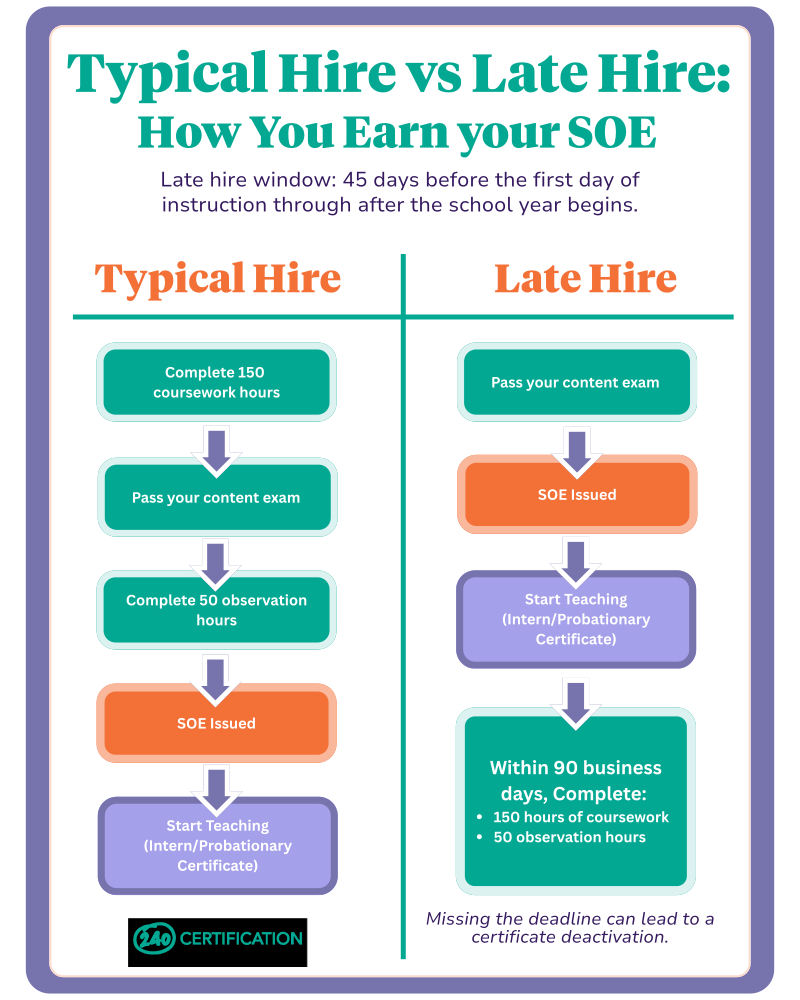
In a normal hiring situation, you would finish all of the SOE steps first—the first 150 hours of coursework, passing your content test, and completing your observation hours—before you can start your teaching internship.
But real life doesn’t always follow a neat timeline. Maybe you decide to switch careers in August, or a district calls you with an opening right before school starts. How can you finish your SOE steps in time when the timeline is that tight?
That’s where late hire comes in.
Late hire is designed for tight timelines. It allows you to earn your SOE after you pass your content exam. You’ll then have 90 business days to finish the remaining SOE steps, like your observation hours and your first 150 hours of coursework.
This route allows you to begin teaching under your intern or probationary certificate faster.
How to Qualify for Late Hire
To qualify as a late hire, you must:
- Be enrolled in an alternative certification program (ACP), and
- Be hired during the late hire window, which starts 45 days before the first day of instruction and continues after the school year begins.
Just remember, you still have to pass the required TExES content exam before you can be issued an intern or probationary certificate. You must also complete the remaining SOE steps within 90 business days. Otherwise, your intern/probationary certification can get deactivated.
Commonly Asked Questions
These get mixed up a lot.
Status Letter:
A letter that shows you are enrolled in a program and explains where you are in the process. Some districts ask for it early in your journey.
Statement of Eligibility (SOE):
The document that shows you are eligible to be hired as a teacher intern. This is the one tied to internship eligibility.
Maybe. It depends on what you completed, how long ago it was, and whether it matches what your current program requires.
TEA rules allow programs to decide whether to give credit for prior training or not.
Because of that, transferring of coursework is usually handled on a case-by-case basis.
Your new program has to review your records and approve what they will accept. Not all hours are guaranteed to transfer, and your new program may still require additional training to make sure you’re ready.
Being hired and completing an ACP internship are not automatically the same thing.
If you are hired under DOI and you are not enrolled in an ACP yet:
You may be allowed to teach in that district, but you are not officially moving through your certification pathway with your program. Teaching done before you earn your SOE does not count as your required internship year.
If you want your job to count as your official internship year:
You will still need to earn your SOE. That means completing the steps above (coursework, passing your content exam, and observation hours) so your program can issue your SOE and recommend you for the correct certificate.
One more important note: DOI rules can change over time, and DOI plans are time-limited (a district’s DOI designation can’t exceed five years per plan term). So even if a DOI hire helps you get into a classroom, it is still smart to keep moving toward full certification.
Bottom line: Getting hired is exciting, but don’t stop there. If you want long-term stability, stay on track toward your SOE, internship certificate, and standard certificate.

Ready to start your Texas teaching journey?
You bring the passion. We’ll bring the plan and walk with you every step of the way.