
Getting Hired: Starting Your Paid Teaching Internship
Quick Answer
Once you earn your Statement of Eligibility (SOE), you can apply for teaching jobs that count as your internship. A teaching internship typically lasts for one full academic school year.
When you’re hired, you’ll be the main teacher in the classroom and you’ll get support from both your school and your certification program. You’ll have a campus mentor to help with day-to-day questions and a field supervisor from your Alternative Certification Program (ACP) who observes you and coaches you.
While you teach, you’ll finish your remaining requirements so you can move on to your standard certificate.
Key Takeaways
- Your teaching job must match the subject and grade level of the certification exam you passed in order for it to count for your teaching internship.
- Your internship is paid, and you’ll be the main teacher in the classroom.
- Your teaching internship typically lasts for one full academic school year or, if you begin after the first day of school, 365 days after your start date.
- You’ll have a campus mentor at your school to support you day to day.
- Your Alternative Certification Program (ACP) will also assign you a field supervisor who observes you and provides coaching, too.
- Plan to finish the rest of your program requirements during your internship so you can become fully certified on time.
Table of Contents
Getting Hired to Teach
Once you earn your Statement of Eligibility (SOE), you’re ready for the next big step: getting hired into a teaching job that counts as your internship.
You’re not just looking for any job. You’re looking for a job that your ACP can count as your official teaching internship for your full certification.
What is the internship and why is it required?
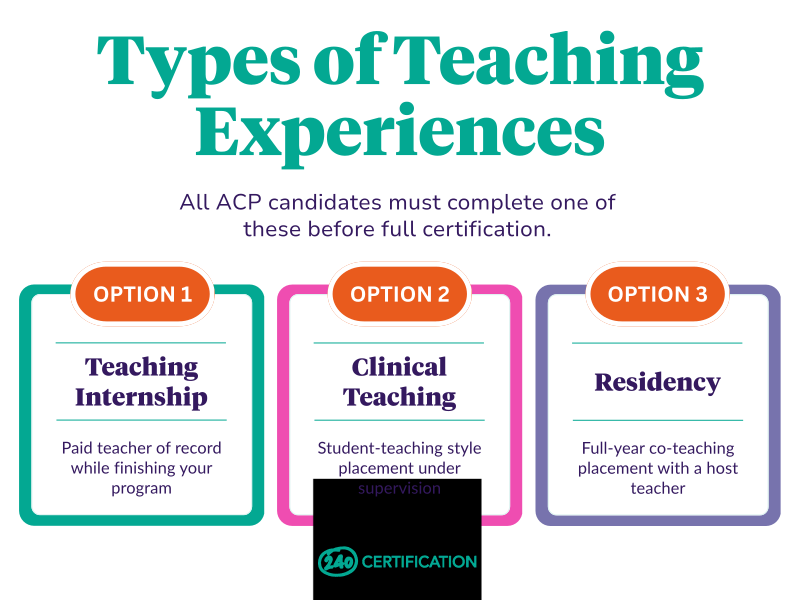
In Texas, everyone in an Alternative Certification Program (ACP) has to complete a required teaching experience before they can become fully certified. There are three ways to do that:
- Teaching Internship
- Clinical Teaching
- Residency
This requirement is very important because Texas requires you to show you can teach in a real school setting, not just complete coursework.
For the purposes of this article, we will focus on the teaching internship. If you want to learn about clinical teaching or the residency option, check it out here.
Most candidates choose the teaching internship route, which means you are hired as the main teacher in a real classroom while you finish your program. You’ll be paid, and you’ll have support from both your school and your ACP while you work toward your standard certificate.
What to Focus on When Getting a Job
Once you have your Statement of Eligibility (SOE), you can apply for teaching jobs. But not every job will work for certification. You’re looking for an internship placement, which means your teaching job counts toward your required internship.
How to Make Sure Your Job Counts for Your Internship
For your job to count as your internship, it must:
1) Match your certification area.
For your job to count as an internship placement, it MUST match the subject and grade level of the TExES content exam you passed. For example, if you pass TExES Mathematics 7–12, your internship job needs to be a math teaching position in grades 7 through 12.
2) Be at a TEA-Approved School
Your internship teaching job can be done in many types of schools (public, charter, private), as long as the campus is approved by the Texas Education Agency (TEA).
Already hired? You can read more here about what to expect if you’re already hired before you officially begin your teaching internship.
Where You Can Teach for Your Internship
You can complete your internship at these types of schools:
- Texas public charter schools authorized under Texas Education Code, Chapter 12
- DoDEA schools (Department of Defense Education Activity)
- Private schools accredited by TEPSAC (Texas Private School Accreditation Commission)
If you’re unsure about a school or assignment, your program can tell you whether it qualifies.
What should I expect once I am hired?
✏️ Your role in the classroom
Once your internship starts, you’ll be the main teacher in your classroom. You’ll plan lessons, teach, manage your classroom, and handle the day-to-day work that comes with being a teacher. While you’re teaching, you’ll also keep working on any remaining program steps, like finishing coursework and completing required exams (like the Pedagogy and Professional Responsibilities exam, or PPR, if you haven’t taken it yet).
⏰ Your internship timeline
Your internship lasts one full academic school year in your certification area. If you are hired after the first day of school, your internship year will typically run 365 days from your start date.
👣 Remaining steps for your ACP
You’ll have regular check-ins during the year, including observations from your Alternative Certification Program (ACP). These observations are required by all programs and are meant to help you improve with feedback and coaching, not to “catch” you doing something wrong. You’ll also have support from your school and your program as you grow into the role.
Required observations during your internship
Observations are a normal part of your internship year. They are simply times when someone, like your Field Supervisor or Principal, watches you teach to see how you are doing. These observations help your program give you tips and feedback that you can use to get better.
Here’s what to expect:
Formal Observations:
These are longer, 45-minute check-ins where your Field Supervisor watches you teach a lesson. You will have at least five of them during your internship year. The very first one must happen in your first four weeks in the classroom, and it has to be in person.
Informal Observations:
These are quick, 15-minute follow-up checks, like a short visit from your principal. You will also have six of these. They are used to check on your progress for a specific goal you talked about after a formal observation.
Your ACP will tell you how observations are scheduled, what they look like, and how feedback is shared.
What support will I have during my internship year?
You won’t be expected to figure everything out on your own. While you’re teaching, you’ll have support from both your certification program and your school campus. Below is what that support typically looks like, and who you can go to when you need help.
Program Support: Your Field Supervisor
One of the main ways your Alternative Certification Program (ACP) supports you during your internship is through a Field Supervisor.
A Field Supervisor is an experienced educator assigned by your program to:
- observe your teaching (the formal observations)
- give written feedback
- coach you as you grow
- provide ongoing support
Texas also requires your Field Supervisor to be trained. They must be trained annually by the program and complete TEA-approved field supervisor training at least once every three years, so they’re equipped to support candidates well.
So, you’re in great hands with their training and experience guiding you.
School Support: Campus Mentor
Your campus mentor is your go-to person at the school. They are a certified teacher with at least 3 years of experience working on the same campus and they help you with the practical, day-to-day parts of teaching, like:
- routines and expectations on your campus
- pacing and classroom management
- “how things work here” questions
The Texas Education Agency (TEA) expects schools to assign you a campus mentor early in your internship. In most cases, a mentor should be assigned within the first few weeks.
How is a campus mentor different from a field supervisor?
Both are there to support you, but they do it in different ways:
📚 Campus mentor: supports you inside the school, day to day. They’re on your campus and can help with practical teaching support and campus systems.
💻 Field supervisor: supports you through your certification program. They represent your ACP, complete required observations, and coach you as you work through your program requirements and grow your teaching skills.
How You Become Fully Certified
Once you’re hired, teaching will take up the majority of your focus. But you’ll also need to prioritize finishing the final steps needed to move from intern to fully certified.
1. Finish any remaining coursework or training
During your internship year, you’ll still have some coursework or training to complete. Even though teaching will take most of your focus, don’t ignore this part.
A lot of the lessons are meant to help you right away with things like lesson planning, classroom management, and responding to student needs, so you can use what you’re learning in your classroom as you go.
Staying on pace also matters for your timeline. If coursework falls behind, it can slow down your program completion and delay when you can move on to your standard certificate. If you’re ever unsure what’s left or when it’s due, your program will tell you exactly what to complete and by what deadlines.
2. Complete any remaining exams
You already passed your TExES content exam to earn your Statement of Eligibility (SOE). Depending on your situation, you may still need exams like the Pedagogy and Professional Responsibilities (PPR) exam or other required tests for your certification area.
You can learn more about the PPR exam here.
3. Complete your internship and observations
Your internship is a required part of becoming a fully certified teacher, so it is important to successfully complete your entire internship.
Remember that your first certificate (the intern or probationary one) is only good for one year. So it’s important to keep up with your coursework, classroom observations, and tests. This way, you will be ready to get your standard, long-term certificate as soon as your internship year ends.
If you start to feel behind, tell your program right away so they can help you make a plan.
4. Apply for your standard certificate
After you finish your internship, coursework, and pass all of your exams, your ACP will formally recommend you for the standard certificate through the TEA Educator Certification Online System (ECOS).
Here is the process for applying for your standard certificate:
- Your ACP will formally recommend you for the standard certificate through the Educator Certification Online System (ECOS).
- Log in to your TEAL (TEA Login) account and apply for the Standard Certificate, which includes paying the necessary application fees.
- Complete the national background check using your fingerprints. If the TEA does not already have your fingerprints on file, this process will begin when you submit your certificate application.
After all of these steps are complete, your standard certificate typically processes within a few days to a few weeks, though it can sometimes take longer during peak hiring seasons, like summer. If it has been more than 3-4 weeks, you should contact your ACP to confirm they submitted the recommendation in the system correctly.
Common Questions Asked
Some districts can hire non-certified teachers through something called a District of Innovation (DOI) plan. That can get you into a classroom, but it does not automatically mean you are completing your internship that counts towards your certification requirements.
DOI is a district hiring exception. Your ACP program still has to verify and support your placement for it to count.
DOI hire: The school district hires you using their own local rules, even if you don’t have a standard Texas teaching certificate yet. This is a hiring choice by the district, not a path to your certificate by itself.
ACP Internship hire: You get a job as part of your alternative certification program. You must have an intern or temporary certificate before you start. Your ACP reviews your school and assignment to make sure it qualifies, then supports you through the required observations and program deadlines.
Usually, no—at least not automatically.
If you’ve already started teaching before earning your Statement of Eligibility (SOE) and being issued an intern/probationary certificate, any previous teaching experience will not count towards a future internship. However, your current teaching position can potentially be converted into your official internship, allowing it to count moving forward.
Even if you began teaching under a District of Innovation (DOI) plan, that teaching job will not be able to count for your internship requirement until you complete these steps.
- You’ve been accepted and enrolled in your Alternative Certification Program (ACP).
- You are the teacher of record (not an apprentice, substitute, or paraprofessional title).
- Your current campus is at a TEA-approved school district.
- You have passed your TExES content exam and your program has issued your intern or probationary certificate.
- Your teaching area matches your certification area.
Because hiring titles, schedules, and certification matches vary by district and role, your exact steps may be different. The fastest way to get a clear answer is to apply and enroll in the ACP that’s the best fit for you, then ask your program for guidance on next steps.
If you choose 240 Certification, you can ask your Admissions Advisor or your Program Advisor to review your situation and help you map the cleanest path forward.
For your current teaching job to count as your official internship, you need to spend at least 4 hours (240 minutes) of instructional time in the same subject you’re getting certified in.
For example: If you passed the TExES Social Studies 4–8 exam, your daily schedule should include at least 240 minutes teaching Social Studies. The rest of your day can include other duties—like athletics if you’re also coaching.
If your schedule doesn’t include the 4 hours in your certification area, your school or district may be able to change your schedule or teaching assignment so it does.
If they can’t make that change, you may be able to stay in your current job this year, then look for a better match next year so your internship can count toward certification.
A really common worry is: “Will a district actually hire me if I’m not fully certified yet?”
The answer is usually yes.
School districts and charters are used to hiring ACP candidates, because internships are a normal part of the certification process.
That’s exactly why your Statement of Eligibility (SOE) matters. When you have your SOE and you’ve passed your TExES content exam, you’re showing two important things:
- your program says you’ve met the early requirements to start teaching, and
- you’ve proven you know the subject you’re being hired to teach
So when you apply, you’re not asking a district to “take a chance” on you. You’re applying as an approved intern candidate who is on track for full certification.
The PPR exam stands for Pedagogy and Professional Responsibilities. It’s a Texas certification test that checks whether you understand how to teach, not just what you teach. It covers topics like lesson planning, classroom management, teaching strategies, and professional responsibilities.
Most candidates take the PPR later in the program, often while they’re teaching during their internship year. Your program will tell you when you’re eligible, what steps you need to complete first, and how to register.
Everyone who applies to become a teacher in Texas must get a national background check using their fingerprints.
If you have anything on your record that you worry about, the TEA (Texas Education Agency) suggests an early check called the Preliminary Criminal History Evaluation.
- This check is optional and costs $50.
- It is based on what you tell them and the papers you send in.
- After the TEA gets everything, they will send you a letter with the results in about 90 days.
Even if the TEA says you are clear, districts can still have their own hiring rules. If this applies to you, it’s worth looking into early so you can make a plan.
There can be, and it helps to expect them so nothing catches you off guard.
Costs for Your Program
These are the costs connected to your teacher program (ACP):
- Program Fees: This includes your tuition, monthly payments, or extra fees if you take longer than the normal time to finish the program.
- Study Help: Costs for any study tools (test prep) you need, if they are not already included.
- Exams: Fees you have to pay when you take your certification tests.
Costs for the State of Texas
These are the common fees that go to the state:
- Application Fee: A fee to apply for your certificate (like the intern, temporary, or standard one). This is often about $78 and you pay it through the state’s online system (ECOS).
- Background Check Fees: You will pay two different fees for the fingerprinting and background check: one fee to the Texas Education Agency (TEA) when you apply, and a separate fee to the company that scans your fingerprints.

Ready to start your Texas teaching journey?
You bring the passion. We’ll bring the plan and walk with you every step of the way.